

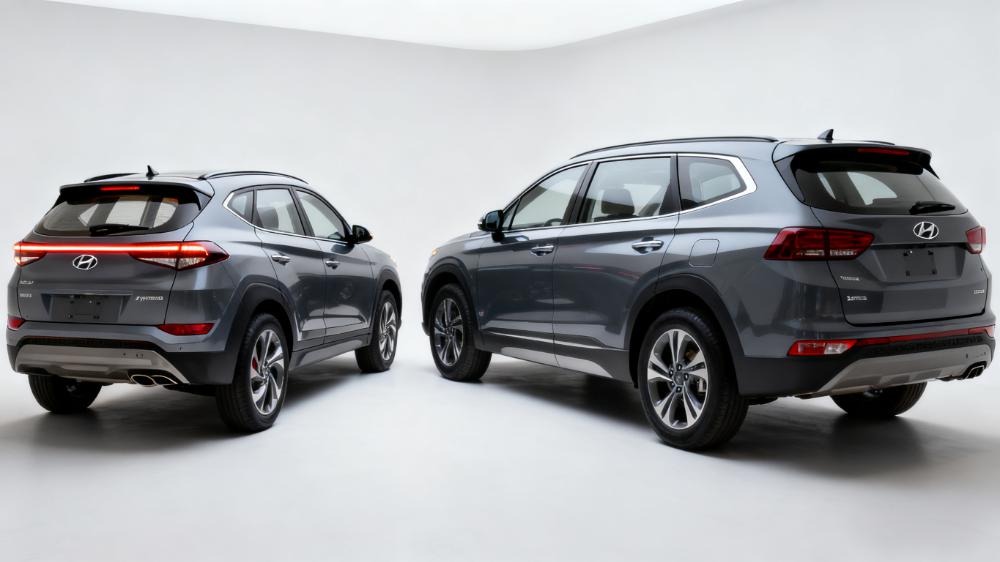
The Hyundai Tucson and Santa Fe are both solid choices in the midsize SUV space, but they're really playing different games. The Tucson (2023) is a compact SUV—think of it as the agile city driver—while the Santa Fe's a full midsize SUV, built for bigger families and longer trips. If you're juggling city traffic and want to save on gas, the Tucson's your friend. But if you need room for passengers, gear, or just want a bit more muscle under the hood, the Santa Fe's the one to lean into. Here's the real talk on what actually matters.
Price & Value
The Tucson kicks off at $27,150, while the Santa Fe starts at $30,650—so yeah, that $3,500 jump upfront. Both have similar trim levels (SE, SEL, Limited), but the Santa Fe's base model comes with more stuff out of the box, like a bigger touchscreen and heated front seats. The Tucson's lower starting price is great if you're watching your wallet, but the Santa Fe's extra space makes the price feel more justified when you're hauling kids or camping gear.
| Feature | Tucson (2023) | Santa Fe (2023) |
|---|---|---|
| Base MSRP | $27,150 | $30,650 |
| Max Trim MSRP | $35,950 | $40,550 |
| Standard 18" Wheels | SE+ | SEL+ |
| Heated Front Seats | SEL+ & Up | SEL & Up |
Dimensions & Practicality
The Santa Fe's longer frame (184.7" vs. 178.1") isn't just a number—it means real, usable space. The Tucson's cargo room (33.6 cu. ft.) is fine for daily runs, but the Santa Fe's 35.7 cu. ft. (with seats up) and 72.5 cu. ft. (folded) make it way better for weekends or road trips. And yeah, the Santa Fe offers a third row in some trims, but it's tight—good for kids, not for adults.
| Dimension | Tucson | Santa Fe |
|---|---|---|
| Length | 178.1" | 184.7" |
| Wheelbase | 106.3" | 111.2" |
| Cargo Space (Rear) | 33.6 cu. ft. | 35.7 cu. ft. |
| Cargo Space (Folded) | 71.5 cu. ft. | 72.5 cu. ft. |
Performance & Fuel Economy
The Tucson's standard 2.5L engine (195 hp) is smooth and efficient, while the Santa Fe gives you a choice: same 2.5L or a punchier 1.6L turbo (201 hp). The turbo Santa Fe hits 60 mph in 7.2 seconds—faster than the Tucson's 8.0. But here's the kicker: the Tucson's gas mileage (27/35 mpg city/highway) beats the Santa Fe's turbo (23/31 mpg). If you're counting pennies at the pump, the Tucson's the clear winner.
| Engine | Tucson | Santa Fe (Turbo) |
|---|---|---|
| Horsepower | 195 hp | 201 hp |
| Torque | 181 lb-ft | 269 lb-ft |
| 0-60 mph | 8.0 sec | 7.2 sec |
| EPA City/Highway MPG | 27/35 | 23/31 |
Tech & Safety
Both have Hyundai's 10.25" touchscreen, Apple CarPlay, and Android Auto—no surprises there. The Santa Fe's SEL+ trim comes standard with a bigger 12.3" digital cluster, while the Tucson's is an option. Safety-wise, both nail a perfect five-star NHTSA rating, but the Santa Fe throws in blind-spot monitoring and rear cross-traffic alert on lower trims. That's a nice touch if you're not in the top trim.
The Bottom Line
If you're a city driver or just want to keep gas costs low, the Tucson's the one. But if you've got a family, a dog, or a habit of overpacking, the Santa Fe's extra space and power make the extra cost worthwhile. The numbers don't lie: the Tucson's the fuel-sipper, the Santa Fe's the space-saver. Both are great in their lane—just pick the lane that fits your life.